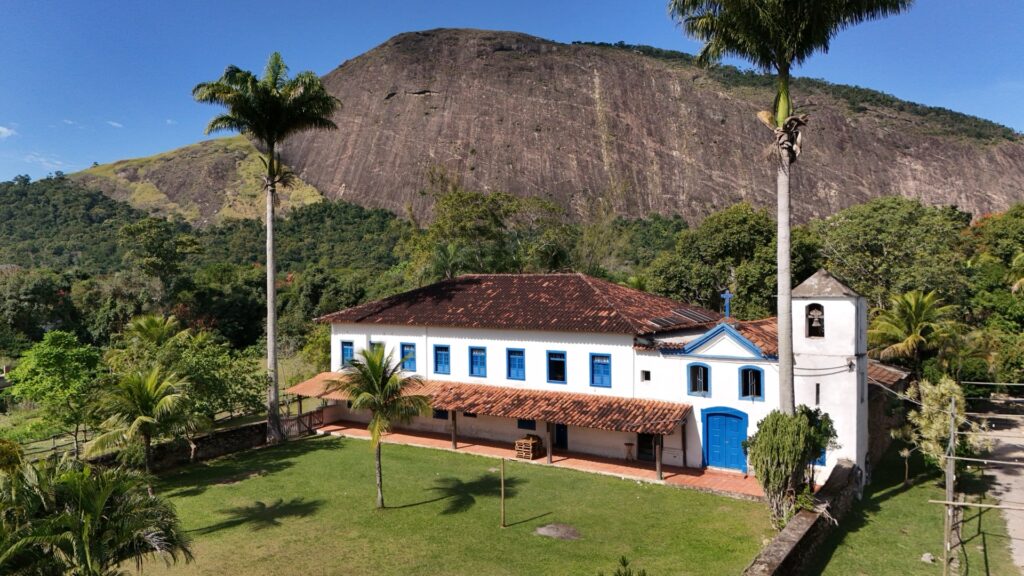
Fazenda Itaocaia, dated to 1627, is an architectural and historical landmark that traces back to the early colonial period of Brazil, originating from the first land grants made after the Portuguese victories that preceded colonization. On April 8, 1832, the English naturalist Charles Darwin visited the property, later describing it in his books The Voyage of the Beagle and Diary of a Naturalist Around the World.
The estate covers a total area of just over 29,000 m².
The main house is an imposing two-story building which, despite modifications made before its heritage listing, retains the grandeur of its era. It includes 15 bedrooms (11 suites), 2 social bathrooms, 3 large living rooms, and 1 kitchen.
Historical remnants include significant vestiges of the plantation’s production and daily life, such as the old sugar mill (engenho) and the slave quarters (senzala).
The chapel is a space of faith and history, surrounded by an earthen wall built using traditional taipa construction techniques.
Recreational and communal areas include a soccer field and horse pastures.
Measurements:
Total area: 25,500 m²
Main house: 486 m²
Sugar mill: 400 m²
Mill entrance: 90 m²
Slave quarters: 212 m²
Chapel: 152 m² (including sacristy)
Swimming pool: 76 m²
Pool deck: 218 m²
Pool barbecue area: 40 m²
Caretaker’s house: 160 m²